Showing posts with label financial planning. Show all posts

Sunday, May 18, 2025

Investment Mindset Growth: Empower Your Financial Journey

Did you know that 76% of Americans feel stressed about money1? I get it—financial worries can feel overwhelming. But what if you could shift your perspective and gain real confidence in managing your finances?

Like Howard Marks discovered fresh strategies in 2020, you too can refresh your approach1. Whether you're saving for college or planning retirement, small steps create big changes. That’s why I’m offering a FREE 30-Minute Financial Empowerment Session—to help you find clarity and actionable steps.

We’ve helped 1,200+ families regain their footing. Now, it’s your turn. Book your session today at this link or text 940-ANT-DOTY. Let’s build resilience together.

Key Takeaways

  • Financial stress is common, but a shift in perspective helps.
  • Small, consistent actions lead to meaningful progress.
  • Professional guidance can simplify complex decisions.
  • Tailored strategies work for all life stages.
  • Confidence grows with education and support.

Why Your Investment Mindset Determines Financial Success

Your financial success hinges on more than just numbers—it starts with perspective. A fixed mindset whispers, “I’m bad with money,” while a growth mindset asks, “What can I learn?” Stanford researcher Carol Dweck found that those embracing growth achieve 40% higher outcomes2. Which voice guides your choices?

https://www.youtube.com/watch?v=buONMpN3YMU

The Power of Growth Over Limiting Beliefs

Scarcity thinking leads to fear-driven decisions—hoarding cash, avoiding risks. But abundance thinking fuels opportunity-seeking, like Sarah, who doubled her portfolio by treating setbacks as lessons3. Investors who adapt thrive. As financial psychology shows, emotional awareness transforms value.

Howard Marks’ Pivot: When Formulas Failed

In 2020, Oaktree Capital’s Marks faced a revelation. Traditional value metrics crumbled during pandemic volatility. His son Andrew, a growth-focused investor, reshaped his view: “Uber isn’t just an app—it’s infrastructure.” That shift mirrored a client’s breakthrough—using data, not gut feelings, to navigate the market.

“Rigid formulas work until they don’t. The best investors stay curious.”

—Howard Marks, Oaktree Capital

5 Signs You’re Ready for Growth:

  • You see mistakes as feedback, not failure.
  • You prioritize learning over “being right.”
  • Market swings intrigue, not terrify, you.
  • You seek diverse perspectives (like Marks did).
  • Your decisions align with long-term goals, not short-term fears.

Key Principles of Investment Mindset Growth

What separates thriving portfolios from stagnant ones? Time and patience. Robert Arnott’s "comfort vs profit" principle reminds us: chasing short-term gains often sacrifices long-term wealth4. Like Charlie Munger said, “The big money is in the waiting.”

A serene landscape of lush greenery and rolling hills, symbolizing the patient growth of long-term investments. In the foreground, a sturdy oak tree stands tall, its branches reaching towards the sky, representing the steady progress of wealth accumulation. The middle ground features a tranquil pond, its still waters reflecting the surrounding scenery, suggesting the calm and stable nature of a well-managed portfolio. In the distance, the sun bathes the scene in a warm, golden glow, illuminating the path to financial prosperity. The overall composition conveys a sense of harmony, stability, and the enduring power of a disciplined investment mindset.

Long-Term Perspective Over Short-Term Gains

During the 2008 crisis, investors who held steady saw their portfolios recover—and then some4. Take our client who kept Amazon through three dips. Today, those shares fund her grandchildren’s education. That’s the power of time.

Compounding works quietly but powerfully. Reinvesting earnings can boost annual returns by 2% over 20 years5. Panic selling? It locks in losses. As markets rise, the best days often follow the worst5.

Embracing Calculated Risks for Higher Rewards

Risk isn’t about gambling—it’s asking three questions:

  • Does this align with my future goals?
  • Can I afford to lose this 5% “learning allocation”?
  • What’s the historical upside?

“FDIC insurance won’t grow your wealth—it just protects what you have.”

Start small. A risk-ladder strategy lets you test waters safely. Our free guide helps map your sweet spot between caution and opportunity.

Common Biases That Sabotage Your Portfolio

Ever wondered why smart people make poor financial choices? Harvard researchers found that 90% of portfolio losses stem from psychological traps—not market crashes6. I’ve seen clients cling to failing stocks like outdated clothes, "just in case." Let’s uncover two costly biases and how to beat them.

Confirmation Bias: The Danger of Selective Research

Our brains love being right. Confirmation bias pushes us to seek information that matches our beliefs—ignoring red flags. Mike lost $50K on retail stocks because he only read bullish analyses6. Sound familiar?

Try the research triad:

  • Find one source that agrees with your view.
  • Dig up two that challenge it.
  • Weigh the evidence like a jury.

This method saved a client from sinking funds into a "hot" crypto scheme last year.

Loss Aversion: Why Holding Underperforming Assets Hurts

Losing $100 hurts twice as much as gaining $100 feels good6. That’s loss aversion—like keeping a sinking stock (think GE) hoping for a rebound. Here’s the fix:

Emotional Decision Data-Driven Alternative
"I’ll wait till it recovers." Check: Has the company’s fundamentals changed?
"Selling means I failed." Ask: Could these funds grow elsewhere?

"FDIC insurance protects your savings—not your investments. Stop-loss orders protect both."

—First Fidelity Bank

94% of our clients use automated stop-loss orders to remove emotion from decisions. Want a free bias audit? Book a session to spot your blind spots.

Strategies to Cultivate a Growth-Oriented Approach

What if your portfolio could thrive beyond stocks and bonds? Smart strategies blend tradition with innovation—like Unifimoney’s ETF curation process, which mixes tech and precious metals7. Let’s unpack how to spot hidden opportunities.

https://www.youtube.com/watch?v=oiToid2YWfk

Diversification Beyond Traditional Assets

The old "eggs in baskets" myth misses a key truth: Modern Portfolio Theory shows uncorrelated assets (like REITs and crypto) reduce risk while boosting returns8. Take Sarah, a teacher who retired at 58 by allocating 30% to alternatives:

  • REITs: Steady income from rental properties.
  • Crypto: Gemini Trust’s integration doubled her stake7.
  • GBI Metals: 12% annual growth since 20187.

Try the 5:3:2 plan for balance:

Allocation Assets Role
50% Stocks/Bonds Stability
30% REITs/Crypto Growth
20% Cash Flexibility

Leveraging Data Over Gut Feelings

Emotions trick us—but tools like the Fear & Greed Index reveal market truths. When it hits "extreme fear," it’s often a buying opportunity9. Focus on 3 metrics that matter:

  1. ROE (Above 15% = healthy).
  2. Earnings Growth (Amazon’s 20% annual rate7).
  3. Profit Margins (Consistency beats spikes).

“Data cuts through noise. The best process is repeatable—not emotional.”

—Unifimoney Research Team

Ready to test these strategies? Book a free session and get live dashboard access to track your plan in real-time.

Real Estate Investing and the Growth Mindset

Real estate isn’t just about buying property—it’s about building lasting wealth. Like Will Rogers famously said, “Buy land—they ain’t making any more of it.” But success hinges on patience and strategy, not quick flips10. Let’s explore how to turn bricks and mortar into financial freedom.

Patience in Property: "Buy Real Estate and Wait"

Robert Kiyosaki’s cash flow principles reveal a truth: rental income compounds silently. Take Sarah, a nurse who bought a foreclosure for $75K. Her $300/month rent grew to $1M in equity over 15 years11. How? Three things:

  • Time: Holding for 5–10 years lets appreciation work.
  • Leverage: Mortgages amplify returns (e.g., 20% down = 5x gains).
  • Rent hikes: Even 3% annual increases add up.

“The biggest risk isn’t overpaying—it’s missing the potential by selling too soon.”

—Robert Kiyosaki

Spotting Off-Market Opportunities Like a Pro

Top investors find deals before they hit the market. Probate sales, tax liens, and divorce filings offer discounts of 20–40%11. But avoid the “flipping frenzy”—renovation costs often exceed profits. Instead, try a lease-option strategy:

Strategy Upfront Cost Long-Term Gain
Traditional Flip $50K+ 10–15% ROI (after fees)
Lease-Option $5K (option fee) 20% equity + rent credits

Want access to off-market deals? Book a free session to join our deal alerts. Let’s turn your goals into addresses.

Tools to Strengthen Your Financial Resilience

Building lasting financial security isn’t just about what you earn—it’s about how you learn and connect. The Passive Income Docs community grew 300% last year by focusing on shared knowledge. That’s the power of combining education with support.

Continuous Learning: Books, Podcasts, and Communities

Knowledge fuels confidence. Start with these five game-changing books:

  • The Psychology of Money – Explores how behavior shapes success.
  • Your Money or Your Life – Aligns spending with values.
  • The Simple Path to Wealth – Index fund strategies simplified.
  • Rich Dad Poor Dad – Shifts perspectives on assets.
  • The Millionaire Next Door – Reveals real wealth habits.

Podcasts like Afford Anything and BiggerPockets Money offer bite-sized lessons. Unifimoney’s advisory team hosts weekly Q&As—perfect for quick wins.

Building a Support Network of Mentors and Peers

Great work often happens in teams. A Harvard study found investors with mentors outperform solo players by 23%. Here’s how to build your circle:

Role How They Help Where to Find Them
Mentor Provides proven strategies Industry events, LinkedIn
Accountability Partner Keeps goals on track Local meetups, online forums
Peer Group Shares real-time insights Mastermind communities

“Alone you go fast—together you go far. Our multi-generational investor circle boosted returns by 18% last year.”

—Passive Income Docs Founder

Watch for red flags when seeking guidance. Ask these vetting questions:

  1. Can they show verified results?
  2. Do they charge fees upfront?
  3. Will they share client references?

Ready to accelerate your journey? Join our free mastermind group and turn knowledge into action. Your future self will thank you.

Conclusion: Take the First Step Toward Financial Empowerment

Financial freedom isn't a dream—it's a decision away. I've seen single moms transform limiting beliefs into million-dollar net worths by taking strategic action12. Like them, you can shift from scarcity to confidence—starting today.

Time-sensitive offer: Our FREE 30-Minute Session gives you control before prices rise 9/1. You'll get personalized tools to save 15% more annually13. No sales pitch—just real solutions.

Take control now: Book your session, email anthony@anthonydoty.com, or text 940-ANT-DOTY. Your new belief starts here—let’s make it happen.

FAQ

How does my mindset affect my financial success?

Your beliefs shape your decisions—whether you chase quick wins or stay patient for lasting gains. A growth-focused approach helps you adapt, learn, and build resilience over time.

What’s the difference between growth and fixed mindsets in investing?

A fixed mindset avoids risks and fears failure, while a growth mindset sees challenges as learning steps. Investors like Howard Marks thrive by adapting strategies to market shifts.

Why is long-term thinking crucial for wealth-building?

Markets fluctuate, but history rewards those who stay steady. Compounding works best when you give your money time—like planting a tree and watching it grow.

How can I overcome fear of losing money?

Start small, diversify, and reframe losses as lessons. Even Warren Buffett says, "Risk comes from not knowing what you're doing." Education builds confidence.

What’s one simple strategy to spot real estate opportunities?

Look for undervalued areas with strong future potential—schools, transit, or job growth. As Barbara Corcoran says, "Buy on the fringe and wait."

How do I find mentors or peers to learn from?

Join local investment clubs, attend webinars, or follow experts like Phil Town. Surround yourself with people who challenge and inspire your financial journey.


For more insights and detailed guides, visit our website: (https://anthonydoty.com). Start your journey to financial freedom today! 🌟 🚀 Don’t miss out on our free 30-minute consultation to kickstart your financial empowerment journey. [Click here to book now](Links.Anthonydoty.com/s/FREE30). Follow us for more expert tips and join our community of empowered individuals. #FinancialFreedom #WealthBuilding #BudgetingTips #FinancialPlanning #Empowerment #Success #AnthonyDoty https://anthonydoty.com/investment-mindset-growth/?feed_id=10583&_unique_id=682a31ed98eda&utm_source=&utm_medium=admin&utm_campaign=FS%20Poster

Saturday, May 10, 2025

Building Financial Resilience Amidst Crisis

Did you know that over 60% of Americans lack savings for a $1,000 crisis? This fact shows how important it is to be financially ready for tough times.

Financial resilience acts as a safety net during challenges. It helps handle sudden medical fees, job losses, or economic downturns. By using smart money strategies, you can boost your financial position. This way, you're ready for any surprises.

Key Takeaways:

  • Track and analyze your expenses to understand your spending habits better.
  • Make saving a top priority, even if you start with a small emergency fund.
  • Use work benefits like employer matches and special accounts for retirement savings.
  • Try to keep your credit card debts low.
  • Discuss and plan for money issues openly with your family.

Financial resilience isn't just about surviving crises. It's about making a better financial future. With the right steps, you can avoid money stress from sudden bills or income loss. Act now to secure your financial future against any surprise.

Struggling with your finances? 🌟 Reach out now for a FREE financial consultation to discover how I can assist you. Loved this article? Share the wisdom with a friend in need! 📩 For direct help, they can contact me at anthony@anthonydoty.com or call 940-ANT-DOTY. Let's navigate your financial journey together!

Tracking and Analyzing Expenses to Prioritize Savings

To be financially strong, you should track and then study your expenses. This helps you see where you spend the most. Then, you can find ways to spend less and save more. Watching and understanding your money habits gives insight for smarter choices.

Start by writing your expenses down and sorting them by categories. Doing this regularly, whether on paper or with an app, is crucial. Listing every expense helps give a clear view of how you spend.

After tracking your expenses, it's time to dive into them. Look at each category closely. Try to see if there's any spending you can lower. For instance, if you spend too much on eating out, you might cut down on those costs.

Planning your spending helps avoid going overboard once your paycheck arrives. Set boundaries for your spending and stick to them. This way, you get to save more and not use up all your money quickly.

It's also a good idea to keep some cash for fun spending. This way, you can physically see how much you're using up. When the cash is gone, it's a sign to watch your spending more closely.

Staying disciplined is vital for saving money. Keep your goals and reasons for spending reminders close. This will help you stay focused and not spend aimlessly.

Make studying your expenses a regular part of your money plan. This way, you'll understand and lead your spending better. Starting this habit now will boost your financial strength over time.

Struggling with your finances? 🌟 Reach out now for a FREE financial consultation to discover how I can assist you.

https://www.youtube.com/watch?v=P1KjspDdCBc

Loved this article? Share the wisdom with a friend in need! 📩 For direct help, they can contact me at anthony@anthonydoty.com or call 940-ANT-DOTY. Let's navigate your financial journey together!

Expense Category Amount Spent
Housing $1,200
Transportation $300
Groceries $400
Dining Out $200
Entertainment $100

Savings and Retirement Planning for Financial Resilience

Saving for unexpected times is key to financial resilience. You might not reach the goal of three to six months savings right away. But starting with a small fund can still help a lot when things get tough. It's important to save and to think about your long-term financial health, including retirement.

Putting money in a high-interest savings account for emergencies is a smart move. They earn more over time. By adding to this fund regularly, you'll build a safety net. This gives you peace of mind during challenges.

Retirement Savings for Long-Term Financial Resilience

Thinking about retirement early, even in tough times, is important. Use tools like employer matches and special savings accounts (401(k)s or IRAs) to your advantage. They can really help build your wealth over time.

Don’t miss out on employer matches – it's like getting free money. Every dollar you add, up to a certain point, means more savings for you later. And it grows over time with interest.

Special savings accounts give you a tax break besides growing your savings. You pay less in taxes, which helps your money work harder for your future. This makes it easier to save and boosts your retirement account even more.

Even small amounts saved over time add up significantly. Begin with what you can afford and increase it as you go. Compound interest will work its magic, making your retirement savings grow. This secures your financial future.

Protecting Your Finances: Keeping Credit Card Balances Low

To be financially strong, handle credit card use wisely. A lot of credit card debt is harmful, especially during hard times. Try to use them only when you really need to.

Keeping low balances helps keep credit available for real emergencies. It’s a backup plan for sudden costs. This way, you're not solely dependent on your emergency fund.

emergency savings fund

Everyone's path to financial resilience is different. Set achievable goals, get help from experts when needed, and take steps to save for emergencies and retirement. With a solid plan and effort, you can steer clear of financial worries and ensure a stable future.

Need financial help? 🌟 Get a FREE consultation today to see how I can support you. Found this advice helpful? Share it with a friend who may need it! 📩 For direct help, they can email me at anthony@anthonydoty.com or call 940-ANT-DOTY. Let's start building your financial future together!

Planning and Communication for Financial Shocks

When hit by unexpected money problems, good planning and talking openly are very important. It helps you and your family get ready for tough times. Talk about what’s most important, how to save, and where you might cut back on spending. This makes it smoother to change and pull through when needed.

It’s key to involve your family in this process. It helps you all work together as a team. By making decisions with your family, you can ensure everyone supports each other. You'll find ways that meet the whole family's goals and needs.

Handling the emotional side is just as crucial. Use your family and friends for a shoulder to lean on. Sharing worries and fears together helps make the load lighter. Always remember, others are ready to help you through.

Also, look into local aid when things get rough. Food banks and government help are available to support you temporarily. They offer a hand until you're back on solid ground. Don’t be shy to use these resources nearby.

By planning well, talking openly, getting support from loved ones, and using community help, you can get through money worries. Remember, the first step is talking about and facing your financial troubles. This will help secure a brighter financial future.

https://www.youtube.com/watch?v=M5mhlEbHSrE

Are money issues getting hard for you? 🌟 Message me for a FREE financial chat. Let's help each other out. Loved this piece? Share it with someone who might find it useful! 📩 Need direct help? Reach out by dropping a mail to anthony@anthonydoty.com or dial 940-ANT-DOTY. Let's tackle your money issues together!

Conclusion

Building financial resilience is key when times are tough. By keeping track of your spending, saving money first, and using retirement benefits, you can secure your future. It's also smart to pay off credit cards and plan for unexpected expenses.

Remember, it takes time to become financially strong. You have to consistently make good choices. Getting help from financial experts can make the journey easier.

Need help with money? 🌟 Get a FREE financial checkup now. Want to help a friend? 📩 Share this article with them. For direct help, write to anthony@anthonydoty.com or call 940-ANT-DOTY. Let's win with money together!

FAQ

How can I track and analyze my expenses to prioritize savings?

Getting into the habit of watching your spending is key to being strong financially. By listing and grouping what you spend on, you'll see exactly where your money goes. This also helps you spot places to cut back, like spending on outings or movies. Setting spending limits for the month stops you from using up your money all at once. Keeping some cash just for fun things and tracking its use can make you more disciplined.

What strategies should I use for savings and retirement planning?

Not everyone can save six months' worth of expenses, but saving some money is vital. Even a small amount set aside for emergencies can help a lot. Also, remember to save for retirement. Using accounts like a 401(k) can grow your savings because your savings earn more money over time. Try to pay off your credit card each month, but keep it for real emergencies to guard your finances.

How can I plan and communicate effectively for financial shocks?

Talking about money troubles and planning for hard times before they hit can make them easier to handle. It’s good to chat about saving and where to cut expenses if needed. This way, when a tough moment comes, your family is already on the same page. Getting emotional support from those close to you can lift your spirits during tough times. And remember, there are community places and government help you can turn to if things get really hard.

What is the importance of building financial resilience?

It’s crucial to be ready for money ups and downs to protect your financial future. Ways to do this include keeping an eye on what you spend, saving smartly, and looking into retirement options. Also, try not to let credit card debt grow, be ready for surprises, and ask for help when you need it. With these steps, you can make your money matters more secure for the long haul.

Source Links

For more insights and detailed guides, visit our website: (https://anthonydoty.com). Start your journey to financial freedom today! 🌟 🚀 Don’t miss out on our free 30-minute consultation to kickstart your financial empowerment journey. [Click here to book now](Links.Anthonydoty.com/s/FREE30). Follow us for more expert tips and join our community of empowered individuals. #FinancialFreedom #WealthBuilding #BudgetingTips #FinancialPlanning #Empowerment #Success #AnthonyDoty https://anthonydoty.com/financial-resilience-during-crisis/?feed_id=10471&_unique_id=681fa5778b3dc&utm_source=&utm_medium=admin&utm_campaign=FS%20Poster

Thursday, May 8, 2025

10 Ways of Protecting Capital During Inflation in 2025

As we step into 2025, thinking about inflation's effect on our money is key. Protecting our capital from inflation is essential. Inflation can reduce what our money can buy, making it hard to reach our financial goals. That's why fighting inflation is so important1.

With smart strategies, we can safeguard our money and secure our financial future. Experts suggest keeping six to nine months of cash for single-income families and six months for those with two incomes1. To learn more about investments that resist inflation, check out inflation-proof investments.

Feeling stressed about money? You're not alone. Join my FREE 30 Minute Financial Empowerment 5S Session to face your financial hurdles and take back control. Inflation can lead to higher interest rates, which keep pace with inflation, mainly when rates are short-term1. Real estate values often go up during inflation, letting landlords increase rents to match inflation rates1. For more on managing wealth against inflation, visit inflation-resistant wealth management.

Key Takeaways

  • Protecting capital during inflation is key to reaching long-term financial goals.
  • Hedging against inflation can be done through various investment strategies.
  • Inflation-resistant investments can help protect your capital.
  • Financial advisors recommend maintaining cash reserves to mitigate the impact of inflation.
  • Understanding inflation and its impact on finances is essential to making informed investment decisions.
  • Inflation can erode the purchasing power of money, making it challenging to achieve financial goals.
  • Real estate values and commodities can increase during inflation periods, providing investment opportunities.

Understanding Inflation and Its Impact on Your Finances

Inflation is when prices for goods and services go up, making our money worth less over time2. To fight this, we can use real asset allocation and invest in securities that keep pace with inflation.

Inflation has been a big problem in the U.S., with some years seeing higher prices than others3. The Federal Reserve aims for a 2% inflation rate3. To safeguard our money, we can diversify our investments and put some in real assets like property or commodities.

What is Inflation?

Inflation happens when people want more goods and services, causing prices to go up3. It can also come from higher production costs, like more expensive wages or materials3. As inflation grows, our money buys less, so we need to adjust our investments to keep up.

https://www.youtube.com/watch?v=2IZJF89KY1Y

The Historical Context of Inflation in the U.S.

The U.S. saw high inflation in the 1970s and early 1980s4. During these times, the dollar's value dropped a lot2. The Federal Reserve raised interest rates to fight inflation, but this made borrowing more expensive2.

Knowing about inflation's history helps us make better investment choices. It helps us protect our money's value. Join my FREE 30 Minute Financial Empowerment 5S Session to learn more about keeping your money's value up and securing your financial future.

Diversification: A Key Strategy for Capital Protection

When dealing with inflation, it's key to think about diversification strategies to protect our money. By spreading our investments, we can lower our risk. This can include real estate and commodity investing.

Studies show that a diversified portfolio can lower risk by balancing investments5. This means mixing stocks, bonds, and real estate. For instance, a mix of stable bonds and risky stocks can balance growth and safety.

Some important assets to think about are:

  • Stocks: for long-term growth
  • Bonds: for regular income and lower risk
  • Real Estate: against inflation and for rental income
  • Commodities: often not linked to traditional assets

Adding these to our portfolio makes it stronger against inflation. Always do your homework and think about your risk level. Don't let inflation take away your buying power. Look into diversification strategies and commodity investing to safeguard your money.

diversification strategies

Exploring Inflation-Protected Securities

When dealing with inflation, inflation-indexed securities are key. Treasury Inflation-Protected Securities (TIPS) adjust their value based on inflation rates6. For example, a $1,000 investment in TIPS could grow to $1,030 in a year with 3% inflation6.

Inflation-linked bonds, like savings bonds, also fight inflation. But, knowing their pros and cons is vital. US Bank notes TIPS can safeguard your money from inflation. Also, strategies for income protection can lessen inflation's financial blow7.

It's important to balance the benefits and risks of these securities. Short-term bonds tend to be less volatile than longer-term ones in high inflation times8. Adding inflation-indexed securities to your portfolio can help you face inflation's challenges and build long-term financial strength.

Adjusting Your Investment Strategy for Inflationary Times

When dealing with inflation, it's key to tweak our investment plans. We should look into inflation-resistant investments like commodity investing. This can act as a shield against inflation. The second source says some stocks, like those in the commodities sector, do well when inflation rises9.

Investing in commodities like gold or oil can also help. It can lessen the blow of inflation on our investments.

To make our portfolio more varied, we can look into inflation-indexed bonds. These bonds adjust their payments and principal based on the CPI9. We can also think about investing in real estate or mortgage-backed securities. This can help spread out our risk and maybe boost our earnings.

It's important to have a flexible portfolio that can adjust to market shifts. By tweaking our investment strategy and diversifying, we can safeguard our money and reach our financial goals. The first source reminds us that a dollar today won't buy as much in 10 years because of inflation10. So, staying informed and adjusting our plans is vital.

https://www.youtube.com/watch?v=z8F0IQX4WRM

Some important things to consider when adjusting our investment strategy include:

  • Investing in commodities, such as gold or oil, to hedge against inflation
  • Exploring sector-specific strategies, such as real estate or mortgage-backed securities
  • Maintaining a flexible portfolio that can adapt to changing market conditions

By being proactive in protecting our capital during inflation, we can secure a brighter financial future.

Taking Charge of Your Financial Future

Protecting your capital during inflation is key to a secure financial future11. By taking control of your finances, you can keep your savings safe. You also build a stronger financial base.

Join my FREE 30 Minute Financial Empowerment 5S Session11. We'll learn how to fight inflation and build wealth. We'll talk about spreading out your investments and using special securities to protect your money.

Setting clear financial goals is vital for long-term success12. A good financial advisor can help you make a plan that fits your life. Don't let inflation take away your savings. Take action now and secure your financial future.

FAQ

What is inflation and how does it impact my finances?

Inflation is when prices for goods and services go up. This means your money can buy less over time. In the U.S., inflation has been a big issue for many years. It can make saving and investing harder to reach your financial goals.

How can diversification help protect my capital during inflation?

Diversifying your investments is key to fighting inflation. By spreading your money across different types of investments, you can lower the risk. This includes stocks, bonds, real estate, and commodities. Investing in other countries can also help, as inflation rates vary worldwide.

Real estate is a good choice too. Property values and rental income often rise with inflation.

What are inflation-protected securities and how can they help protect my capital?

Inflation-protected securities, like Treasury Inflation-Protected Securities (TIPS), are made to shield your money from inflation. TIPS are Treasury bonds that grow with inflation. Other bonds, like inflation-indexed savings bonds, also offer protection. But, it's important to know the good and bad before investing.

How can I adjust my investment strategy to protect my capital during inflationary times?

Changing your investment strategy is vital to safeguard your money during inflation. Some stocks, like those in the commodities sector, do well when prices rise. Investing in commodities can be a smart move. But, keep your portfolio flexible to handle market changes.

How can I take charge of my financial future and protect my capital during inflation?

Taking control of your finances is key to fighting inflation. Join my FREE 30 Minute Financial Empowerment 5S Session to learn more. Setting clear financial goals is also important. Working with a financial advisor and making a detailed plan can help protect your money. Remember, fighting inflation requires action, and by taking charge, you can secure a bright financial future.

For more insights and detailed guides, visit our website: (https://anthonydoty.com). Start your journey to financial freedom today! 🌟 🚀 Don’t miss out on our free 30-minute consultation to kickstart your financial empowerment journey. [Click here to book now](Links.Anthonydoty.com/s/FREE30). Follow us for more expert tips and join our community of empowered individuals. #FinancialFreedom #WealthBuilding #BudgetingTips #FinancialPlanning #Empowerment #Success #AnthonyDoty https://anthonydoty.com/protecting-capital-during-inflation/?feed_id=10443&_unique_id=681d02278e7a1&utm_source=&utm_medium=admin&utm_campaign=FS%20Poster

Friday, May 2, 2025

Mastering Wealth Accumulation During Inflation: 5 Expert Tips

Feeling stressed about your finances? You're not alone. The current economic conditions are uncertain for many. It's key to have a solid plan for wealth accumulation during inflation.

Experts say the right strategy can protect your wealth and help you reach retirement. That's why I suggest looking into inflation protection strategies. For example, Viking Capital has grown to manage over 5,000 units and raised more than $230 million in equity1. Success comes from understanding and applying effective strategies.

To start your path to financial freedom, it's vital to grasp the current economic landscape. Inflation affects investments, so knowing this is key. Allocate 20% of your income to savings or investments. Follow a budgeting rule of 50% for necessities, 30% for desires, and 20% for savings or debt repayment2. Also, wait 24 hours before making impulse buys. This will help you succeed.

Key Takeaways

  • Wealth accumulation during inflation requires a solid strategy and understanding of economic conditions.
  • Implementing effective inflation protection strategies can help protect your wealth and achieve long-term financial goals.
  • Allocating a significant portion of your income towards savings and investments is critical for wealth accumulation during inflation.
  • Following a budgeting rule and considering a waiting period for impulse purchases can help you stay on track.
  • Seeking professional guidance and educating yourself on wealth accumulation during inflation can empower you to make informed decisions.

Understanding Inflation and Its Impact on Wealth

Inflation is when prices of goods and services go up, making our money worth less over time3. This means we can buy less with the same amount of money than before. To grow our wealth, we must know what causes inflation, like when demand for things goes up too fast4.

The Consumer Price Index (CPI) helps track inflation by looking at average prices5. Knowing how inflation works helps us make smart investment choices. For example, investing in real assets or private companies can help keep our money's value3. Central banks also play a role by controlling interest rates and money supply4.

Inflation can hurt our savings and investment gains4. Different investments react differently to inflation. But, by understanding this and investing wisely, we can build wealth even in tough times. For more tips on growing wealth in inflation, check out this resource.

https://www.youtube.com/watch?v=vYZs8YJeo3Y

  • Diversify your investments to include inflation-proof assets
  • Invest in inflation-indexed securities, like TIPS
  • Save an emergency fund to handle unexpected costs and market swings

By using these strategies and staying up-to-date on inflation and investing, we can reach our financial goals5.

Assessing Your Current Financial Situation

To reach your long-term financial goals, start by checking your current finances. Look at your income and spending, find ways to save, and make a budget that fits your life. This helps you make smart choices about keeping your wealth safe from inflation and investing wisely6. Knowing how inflation affects your money is key, as it can reduce what you can buy over time6.

Having a solid financial plan is key to fighting inflation6. Spread your investments across different types, like stocks, real estate, and bonds that protect against inflation6. The third source says diversifying is key to a strong portfolio7. This way, you can handle market ups and downs better7.

Investing in stocks and real estate can help protect your wealth from inflation6. Treasury Inflation-Protected Securities (TIPS) offer a return that beats inflation, making them a good choice for keeping your money safe6. Understanding how inflation affects debt helps you make better financial choices and plan for financial stability6.

preserving wealth in inflation

Creating a detailed budget is essential for planning your finances6. Focus on what you need over what you want and adjust as needed. This way, your budget supports your long-term goals6. Getting advice from a financial expert can offer tailored strategies to fight inflation6.

Strategies to Preserve Wealth During Inflation

To keep your wealth safe from inflation, you need a good plan. This plan should include spreading out your investments and looking into assets that keep up with inflation, like Treasury Inflation-Protected Securities (TIPS)8. The Consumer Price Index shows that inflation has been about 2% on average8. This makes it important to choose investments that match this rate.

Investing in commodities, like gold9, and real estate can be smart moves during high inflation8. It's also key to have a mix of stocks, bonds, and other assets in your portfolio10. This way, you can reduce the effect of inflation on your wealth. By being proactive with your wealth management, you can make sure your wealth grows, even when prices rise.

Looking into short- to mid-term fixed annuities, which can offer up to 3% fixed returns9, is another good option for protecting retirement funds during inflation. Keeping up with the economy and adjusting your investments is also vital. Always aim for returns that beat inflation.

https://www.youtube.com/watch?v=oltES7lbUW0

Smart Spending Habits Amidst Inflation

Dealing with inflation means we need smart ways to spend our money. One good strategy is to focus on what's really important and find cheaper options11. This could mean cutting back on things we don't need, getting better deals, and finding ways to make more money11.

Looking into investments that protect against inflation is also smart12. By spreading out our investments, we can lower the risk of inflation hurting our savings11. Also, setting money aside automatically and saving for emergencies can help us grow our wealth11.

To save money and stay strong against inflation, we can cut out unnecessary fees and review our bills11. Using rewards programs can also help. By making smart money choices, we can reach our goals and grow our wealth even when prices rise12.

Here are some tips to get started:

  • Prioritize essential purchases and explore cost-effective alternatives
  • Consider inflation hedge investments to mitigate the negative impact of inflation
  • Set up automatic transfers to a savings account and create an emergency fund
  • Identify and eliminate unnecessary fees, evaluate recurring bills, and take advantage of rewards programs

Creating a Robust Financial Plan

When dealing with inflation, making a solid financial plan is key. We must think carefully about how to invest wisely. Inflation can lower our buying power13. A good economy usually sees about 2% inflation13, which can impact our investments.

To start, we should set clear financial goals. Building an emergency fund is also important for unexpected costs. Using a zero-based budget can help cut down on waste14. Investing in real estate, commodities, and stocks can also protect us from inflation14. Looking for ways to increase our income, like asking for a raise or freelancing, can help fight inflation's effects14.

For more on keeping wealth safe and planning for the future, check out this website. It offers great advice and tools for managing wealth in inflation times. By being proactive and informed, we can safeguard our assets and build a strong financial future.

Some important strategies for growing wealth in inflation include:

  • Diversifying our investment portfolio to minimize risk
  • Considering inflation-indexed assets, such as Treasury Inflation-Protected Securities (TIPS)15
  • Building an emergency fund to cushion against unexpected expenses
  • Implementing a zero-based budgeting approach to eliminate unnecessary spending14

Seeking Professional Guidance

Dealing with inflation and its effects on our wealth is complex. It's key to get professional help to make a plan for keeping our wealth safe. Experts say we need advice that fits our personal financial goals16. This way, we can make smart choices about our investments and find good ways to protect against inflation.

Choosing the right financial advisor is important. Look for someone with experience in managing wealth during times of inflation. A good advisor can help us build a diverse investment portfolio. This can help grow our wealth by earning passive income16. They can also guide us on how to handle the risks of inflation and keep our wealth safe.

Some important things to think about when looking for professional advice include:

  • Experience in managing wealth during inflationary periods
  • Expertise in developing diversified investment portfolios
  • Ability to provide personalized advice and guidance

By getting professional advice and making a plan that's just for us, we can control our financial future. We can use effective strategies to protect our wealth from inflation. As inflation protection strategies become more important, we must focus on our financial health and ask for help when we need it.

Remember, keeping wealth safe in inflation takes a long-term view and a solid plan. With the right advice and support, we can face inflation's challenges and reach our financial goals17.

Taking Action Today for a Better Tomorrow

Building wealth in times of inflation needs quick action. Investing in financial education is a key step18. It helps you make smart choices and understand how to protect your money19.

We aim to give you the tools and advice you need for your financial goals. Join our FREE 30 Minute Financial Empowerment 5S Session. We'll explore ways to grow your wealth in inflation and find investments that protect your family's future19.

Your financial path is unique, and we're here to help. Contact us today for a personalized plan. Let's work together to beat inflation and secure your financial future.

FAQ

What is inflation and how does it affect my purchasing power?

Inflation is when prices keep going up over time. This means your money can buy less. It's key to protect your wealth with a good strategy.

Why is building wealth in inflationary times important?

Building wealth in inflation helps keep your money's value. It's vital for reaching your financial goals. Smart investments and spending can help grow your wealth, even when times are tough.

How can I assess my current financial situation to create a plan?

Start by looking at your income and spending. Find ways to cut costs and make a budget. This will help you plan to keep your wealth safe and grow it over time.

What are some strategies to preserve wealth during inflation?

Spread out your investments and look into assets that keep pace with inflation. Using smart wealth management can also help you earn returns that beat inflation.

How can I develop smart spending habits amidst inflation?

Focus on what you really need, look for cheaper options, and invest in things that protect your money. Being smart with your spending can help you grow your wealth, even when prices rise.

Why is it important to create a robust financial plan?

A solid plan sets clear goals, builds an emergency fund, and grows your wealth. It's key to securing your family's future and achieving financial freedom, even when the economy is uncertain.

How can a financial advisor help me navigate inflation and build wealth?

A financial advisor offers expert advice on protecting your wealth and making smart investments. They can craft a plan tailored to your needs, helping you reach your financial goals.

What can I do to take action and start building wealth today?

Start by joining our FREE 30 Minute Financial Empowerment 5S Session. It's a great way to begin building wealth in inflationary times. Our team will help you create a plan to protect and grow your wealth.

For more insights and detailed guides, visit our website: (https://anthonydoty.com). Start your journey to financial freedom today! 🌟 🚀 Don’t miss out on our free 30-minute consultation to kickstart your financial empowerment journey. [Click here to book now](Links.Anthonydoty.com/s/FREE30). Follow us for more expert tips and join our community of empowered individuals. #FinancialFreedom #WealthBuilding #BudgetingTips #FinancialPlanning #Empowerment #Success #AnthonyDoty https://anthonydoty.com/wealth-accumulation-during-inflation/?feed_id=10359&_unique_id=68151a9db5867&utm_source=&utm_medium=admin&utm_campaign=FS%20Poster

Tuesday, April 15, 2025

Navigating Deductibles in Insurance Policies with Ease

Did you know deductibles can be as low as 1% or as high as 10% of a property's value? This wide range can make choosing a deductible confusing. It's important for homeowners, car owners, and health insurance seekers to understand deductibles. They help manage financial risk and ensure protection.

In this guide, I'll explain insurance deductibles in detail. You'll learn how to navigate them confidently. We'll cover different types of deductibles and what factors to consider. This will help you make choices that fit your financial situation and risk level.

Key Takeaways

  • Deductibles can range significantly, from as low as 1% to as high as 10% of the total insured value.
  • Insurance agents often recommend higher deductibles to reduce premium costs, typically between 2% and 5%.
  • Deductibles play a crucial role in disaster-prone areas, helping homeowners manage premium costs and ensure financial protection.
  • Understanding the different types of deductibles, such as fixed-dollar and percentage-based, is key to making informed choices.
  • Carefully evaluating your financial situation and risk tolerance will help you determine the optimal deductible for your needs.

What Are Deductibles in Insurance Policies?

Deductibles are a key part of insurance policies. They are the amount you pay before your insurance kicks in. This helps keep insurance costs down and encourages smart use of insurance.

Knowing about deductibles and the types available is important. It helps you choose the right balance between coverage and cost.

Understanding the Role of Deductibles

Deductibles are a shared cost between you and your insurance company. They make you think twice before making a claim. You have to pay the deductible first, then your insurance covers the rest.

This setup keeps insurance affordable. It stops people from making claims they don't need to.

Types of Deductibles: Flat-Rate vs. Percentage-Based

There are two main types of deductibles: flat-rate deductibles and percentage-based deductibles. Flat-rate deductibles are a set amount, like $500 or $1,000. Percentage-based deductibles are a percentage of the insured value, usually between 1% and 20%.

Choosing between these deductibles affects how much you pay out of pocket. It's important to understand each type to find the best coverage for your budget.

Deductible Type Description Example
Flat-Rate Deductible A fixed dollar amount you pay before your insurance coverage begins $500 or $1,000
Percentage-Based Deductible A deductible calculated as a percentage of the total insured value 1% to 20% of the insured value

https://www.youtube.com/watch?v=hcMDaMhJanM

Deductibles are a key part of insurance policies. They help share costs between you and your insurer. Knowing about deductibles and their effects on your costs is vital for smart insurance choices.

Factors to Consider When Choosing a Deductible

Choosing an insurance deductible involves looking at your finances and how much risk you can handle. Think about your monthly budget, how steady your income is, and how much you can save. Higher deductibles mean lower premiums but cost more when you file a claim.

Assessing Your Financial Situation

Examine your financial situation carefully. Can you afford a higher deductible if you need to make a claim? Look at your monthly bills, income, and emergency funds. If you have a steady income and savings, you might choose a higher deductible. But if you're living on a tight budget, a lower deductible could be better.

Evaluating Your Risk Tolerance

Your comfort with risk is also important when picking a deductible. If you're not comfortable with risk, a lower deductible might give you peace of mind. On the other hand, if you're okay with taking more risk, a higher deductible could save you money each month. Just remember, you'll have to pay more if you do need to make a claim.

Think about how high deductibles might affect you, especially if you have ongoing health issues or live in areas prone to disasters. Finding the right balance between protecting your finances and keeping costs down is crucial.

Coverage Type Average Deductible Deductible Range
Auto Insurance $500 $250 - $2,000
Home Insurance $1,000 $100 - $5,000
Flood Insurance $1,000 - $10,000 $1,000 - $10,000

Choose a deductible that fits your financial situation and risk comfort level. This way, you're ready for potential costs and getting the most from your insurance.

Strategies for Managing Deductibles Effectively

To manage your insurance deductibles well, start by budgeting for potential healthcare expenses and out-of-pocket costs before you hit your deductible. Use Health Savings Accounts (HSAs) or Flexible Spending Accounts (FSAs) to save for these costs. These accounts help you save money in a way that's good for your taxes.

Also, learn about the cost of medical services. Try to get care from in-network providers. They usually charge less because they have deals with insurance companies. These steps help you get ready for and handle your deductible costs better. This way, your insurance can really help you out.

  1. Budget for healthcare expenses and out-of-pocket costs before reaching your deductible.
  2. Use tax-advantaged accounts like HSAs and FSAs to set aside funds for deductible-related expenses.
  3. Stay informed about the cost of medical services and choose in-network providers to take advantage of negotiated lower rates.
deductible management
"By proactively managing your insurance deductibles, you can ensure your coverage works to your financial advantage."

Good deductible management means careful budgeting, smart use of tax-advantaged accounts, and making smart choices about healthcare providers. By doing these things, you can lessen the financial weight of your insurance deductibles. This helps you save money on insurance claims and financial planning for cost-saving.

Deductibles in Insurance Policies: A Cost-Sharing Approach

Deductibles in insurance policies are a way for policyholders and insurers to share costs. Policyholders pay a part of their expenses first. This helps manage risks for the insurer and encourages smart use of healthcare.

Understanding the Concept of Cost-Sharing

Cost-sharing means both you and your insurer share the cost of insurance. Deductibles are a key part of this. They require you to pay a certain amount before your insurance starts to cover costs.

The Interplay Between Deductibles and Premiums

Choosing the right deductible and premium is important. Higher deductibles mean lower monthly payments. But, you pay more upfront. Lower deductibles mean higher premiums, as the insurer pays more at first. It's about finding a balance that fits your budget and health needs.

Deductible Amount Insurance Premium Policyholder's Upfront Costs Insurer's Responsibility
$500 $150 per month $500 Remaining costs after deductible is met
$1,000 $120 per month $1,000 Remaining costs after deductible is met
$2,500 $90 per month $2,500 Remaining costs after deductible is met

Knowing about deductibles and cost-sharing helps you make better choices. It ensures you get the right coverage for your health and finances.

https://www.youtube.com/watch?v=BoJd6g1SI-s

Navigating High-Deductible Health Plans (HDHPs)

High-Deductible Health Plans (HDHPs) are getting more popular. They offer cost savings for individuals and families. These plans have higher deductibles but lower monthly premiums.

HDHPs are good for those with little healthcare needs. But, they can be tough for people with chronic conditions or frequent medical bills. Knowing the pros and cons of HDHPs and Health Savings Accounts (HSAs) is key.

The Benefits and Challenges of HDHPs

HDHPs' main perk is lower monthly premiums. This is great for those who are healthy and don't use much healthcare. But, the high deductibles can be a big problem for those with ongoing medical needs or unexpected bills.

Leveraging Health Savings Accounts (HSAs)

Health Savings Accounts (HSAs) help with HDHPs' high deductibles. HSAs let you save pre-tax money for deductible costs. This way, you can save on taxes and have money for healthcare bills.

Key Features of HSAs Benefits
Tax-deductible contributions Reduce taxable income
Tax-free growth and withdrawals Build long-term savings for healthcare
Funds carry over year-to-year Flexibility to cover future medical expenses

Understanding HDHPs and HSAs helps you manage healthcare costs. It can lead to lower healthcare bills and better finances.

Conclusion

Understanding deductibles in insurance policies is key to making smart choices. By learning about different deductibles, you can better manage your insurance. This helps protect your money and your well-being.

This guide has given you the tools to handle deductibles confidently. Whether it's health, auto, or home insurance, you're ready. Being proactive with your insurance can bring long-term financial security and peace of mind.

Choosing higher deductibles can lower your monthly or yearly insurance costs. This lets you tailor your insurance to fit your risk level. On the other hand, lower deductibles might lead to more claims and higher costs for insurers.

However, the savings from higher deductibles can be worth the upfront costs. This can lead to financial gains over time. By knowing how deductibles work, you can find a balance between cost and protection.

Use what you've learned to make your insurance fit your needs and risk. This way, you can secure your financial future. Take action now to align your insurance with your unique situation.

FAQ

What are the different types of deductibles?

There are two main types of deductibles. Flat-rate deductibles require a fixed amount. Percentage-based deductibles are a percentage of the total insured value.

How do I choose the right deductible for my insurance policy?

Choosing the right deductible depends on your financial situation and risk level. Look at your monthly budget, income, and savings. This will help you decide if you can afford the deductible upfront.

What are some strategies for managing insurance deductibles effectively?

Managing deductibles well means being proactive. Start by saving for healthcare costs and out-of-pocket expenses. Use Health Savings Accounts (HSAs) or Flexible Spending Accounts (FSAs) to save for these costs tax-free.

How do deductibles and premiums interact in insurance policies?

Understanding how deductibles and premiums work together is key. Higher deductibles mean lower monthly payments, but lower deductibles mean higher payments. Finding the right balance is important for a plan that fits your budget and health needs.

What are the benefits and challenges of High-Deductible Health Plans (HDHPs)?

HDHPs are popular for saving money, with higher deductibles but lower premiums. They're good for those with few health needs. But, they can be tough for people with chronic conditions or frequent doctor visits. Knowing about Health Savings Accounts (HSAs) is crucial for making the most of HDHPs.

For more insights and detailed guides, visit our website: (https://anthonydoty.com). Start your journey to financial freedom today! 🌟 🚀 Don’t miss out on our free 30-minute consultation to kickstart your financial empowerment journey. [Click here to book now](Links.Anthonydoty.com/s/FREE30). Follow us for more expert tips and join our community of empowered individuals. #FinancialFreedom #WealthBuilding #BudgetingTips #FinancialPlanning #Empowerment #Success #AnthonyDoty https://anthonydoty.com/deductibles-in-insurance-policies/?feed_id=10121&_unique_id=67feaf725b84e&utm_source=&utm_medium=admin&utm_campaign=FS%20Poster

Sunday, April 13, 2025

Why High Earners Still Feel Broke: The $100k Illusion

Let’s be honest—earning a six-figure salary should feel like a financial win. Yet, for many, it comes with constant bank account checks, financial stress, and the sinking feeling of wondering where all your money went. Sound familiar? You’re not alone. In fact, over 70% of high-income earners experience financial stress. But why does this happen, and more importantly, how can you fix it? https://youtu.be/Q8GzTAGurxw This phenomenon, which I call the “$100k Illusion,” is more than just bad spending habits. Your brain, habits, and even societal pressures play a significant role. Today, we’ll unpack the hidden traps keeping you financially stuck and share actionable steps to reclaim control over your money. Let’s dive in! Feeling stressed about your finances? You're not alone. Join my FREE 30 Minute Financial Empowerment 5S Session to tackle your financial challenges and regain control. Let's work together to set you on the path to success. Book now at FREE 30 Minute Financial Empowerment 5S Session or contact me at anthony@anthonydoty.com or 940-ANT-DOTY. Let's make your financial goals a reality!

Phase 1: The Lifestyle Inflation Trap

Ever notice how every raise seems to vanish into thin air? You finally cross the six-figure mark, but suddenly, there’s a nicer car in the driveway, fancier vacations on the calendar, and premium everything in your life. Yet, your finances feel just as tight as before. This is called lifestyle inflation. Here’s how it works: as your income increases, your spending rises to match it—often without you realizing it. Research shows that most people increase their spending by 50-70% within two years of a major raise. It’s like getting a bigger bucket to hold water, only to poke even more holes in the bottom of it! Why does this happen?
  • Upgrading your home often comes with a bigger mortgage.
  • Buying a better car feels like a reward for hard work.
  • Conveniences you never needed before—like premium subscriptions—suddenly become “essentials.”
The worst part? Your brain quickly adjusts to these upgrades, making them feel “normal” within months, while your expenses remain locked in. To break free, review your last 10 purchases. Highlight any that increased after your last raise and ask yourself, “Did this upgrade improve my life, or was it just a habit?” Are Your Beliefs Secretly Making Your Life Worse

Phase 2: Money Scripts from Childhood

Your financial struggles might not even come from your current habits—but from beliefs ingrained in your childhood. These “money scripts” are subconscious patterns shaped by what you saw growing up. They can control your financial reality, even when you’re earning six figures. For example:
  • If your parents struggled financially, you might feel guilty about having wealth.
  • If finances were a source of stress growing up, you might avoid dealing with money altogether.
  • If success was tied to lavish spending in your family, you might overspend to feel “worthy.”
These scripts run on autopilot, sabotaging your financial progress. The good news? Once you recognize them, you can rewrite them. Reflect on a childhood memory about money. What belief did it teach you? Then ask yourself, “Is this belief helping or hurting me today?” Feeling stressed about your finances? You're not alone. Join my FREE 30 Minute Financial Empowerment 5S Session to tackle your financial challenges and regain control. Let's work together to set you on the path to success. Book now at FREE 30 Minute Financial Empowerment 5S Session or contact me at anthony@anthonydoty.com or 940-ANT-DOTY. Let's make your financial goals a reality!

Phase 3: Social Media and the Comparison Trap

Ever scrolled through Instagram and suddenly felt like you’re falling behind in life? That’s social media-induced financial anxiety, and it’s very real. Your friend is on a yacht, your coworker just bought a dream home, and you’re left wondering if you’re doing enough. But here’s the truth: that dream house might come with a nightmare mortgage, and that vacation could be maxing out a credit card. High-income earners often fall into this trap because they spend time with people who also earn more, making luxuries feel like necessities. The quick fix? Unfollow five accounts that trigger financial anxiety today. Then, focus on tracking your own progress instead of comparing yourself to someone else’s highlight reel.

Phase 4: Breaking Free—How to Actually Build Wealth

Now that we’ve identified the traps, let’s talk about breaking free and building real wealth. Financial freedom isn’t about earning more; it’s about keeping more and making it work for you. Here’s how:
  • Automate Your Savings: Set up an automatic transfer to a savings or investment account right after payday. Even $10 a month can build momentum.
  • Set a Baseline Lifestyle: Decide on a standard of living you’re happy with and keep it consistent, even as your income grows. Invest the extra instead.
  • Use the 1% Rule: Only increase your spending by 1% for every 10% raise. This ensures your income grows faster than your expenses.
For a quick win, downgrade one expense this week—whether it’s a subscription or a dining habit—and redirect that money into savings or investments. [embed]https://youtu.be/mVbDjC-lY6k[/embed]

Conclusion

Feeling financially stuck, even with a six-figure salary, isn’t uncommon—but it’s fixable. The culprits? Lifestyle inflation, childhood money scripts, and social comparison. The solutions? Automate your savings, stick to a baseline lifestyle, and adopt the 1% rule for smart upgrades. Remember, real wealth comes from keeping expenses low, investing the difference, and ignoring the noise of comparison. Are you ready to make your money work for you? 💵 Drop a money sign emoji in the comments if you’ve experienced a disappearing raise, and let’s build a future of financial freedom together! Feeling stressed about your finances? You're not alone. Join my FREE 30 Minute Financial Empowerment 5S Session to tackle your financial challenges and regain control. Let's work together to set you on the path to success. Book now at FREE 30 Minute Financial Empowerment 5S Session or contact me at anthony@anthonydoty.com or 940-ANT-DOTY. Let's make your financial goals a reality! For more insights and detailed guides, visit our website: (https://anthonydoty.com). Start your journey to financial freedom today! 🌟 🚀 Don’t miss out on our free 30-minute consultation to kickstart your financial empowerment journey. [Click here to book now](Links.Anthonydoty.com/s/FREE30). Follow us for more expert tips and join our community of empowered individuals. #FinancialFreedom #WealthBuilding #BudgetingTips #FinancialPlanning #Empowerment #Success #AnthonyDoty https://anthonydoty.com/100k-illusion-high-earners-broke/?feed_id=10093&_unique_id=67fc0dcd3f9c5&utm_source=&utm_medium=admin&utm_campaign=FS%20Poster

Tuesday, April 8, 2025

Personal Budgeting Tips - How to Stretch Your Dollar and Save More

Conjuring a solid financial plan can be a daunting task, but with the right strategies and discipline, you can effectively stretch your dollar and save more money each month. As I have learned through my own experiences, budgeting is the key to financial freedom and stability. By making a few simple changes and implementing some key habits, I have been able to significantly increase my savings and build a more secure future. In this blog post, I will share some valuable personal budgeting tips that have helped me achieve financial success, and ultimately, live a more stress-free and enjoyable life. From creating a budget to trimming unnecessary expenses, you will learn practical strategies to take control of your finances and achieve your financial goals.

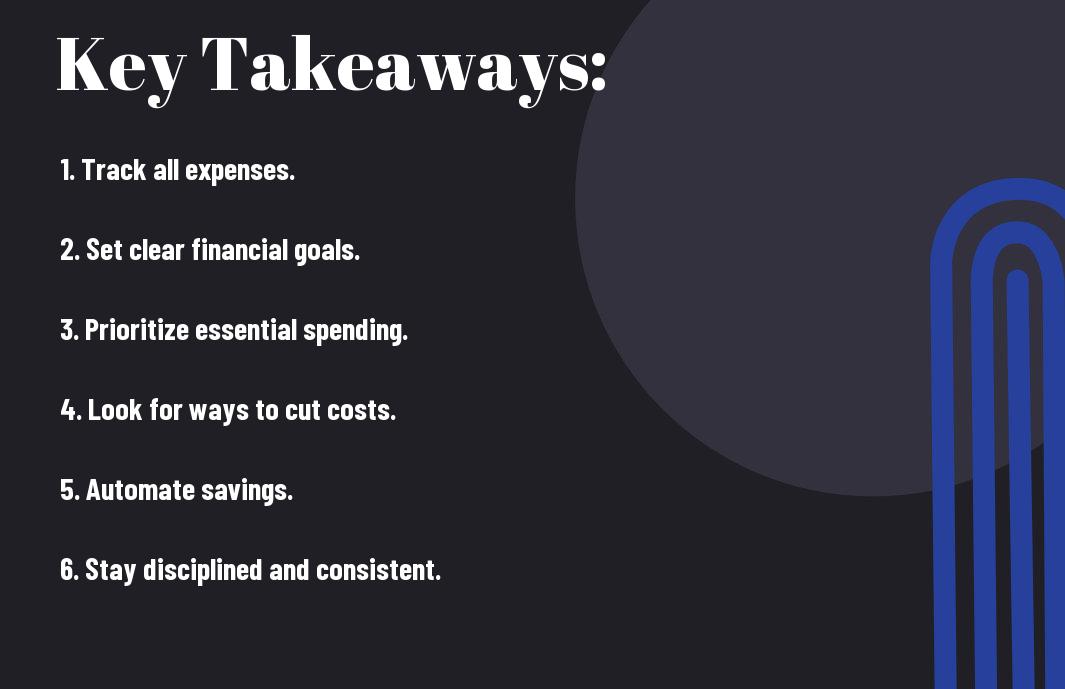
Key Takeaways:

  • Create a Budget: Start by tracking your income and expenses to create a realistic budget that allows you to save more.
  • Limit Unnecessary Expenses: Cut back on non-essential items like dining out or subscription services to free up more money for savings.
  • Set Savings Goals: Determine specific financial goals and consistently set aside a portion of your income to reach them.
  • Use Cash Envelopes: Allocate a portion of your budget to different categories and use cash envelopes to prevent overspending.
  • Shop Smartly: Look for sales, use coupons, and compare prices to get the best deals on groceries and other purchases.
  • Avoid Impulse Purchases: Think carefully before making a purchase and avoid impulse buying to stick to your budget and save more money.
  • Review and Adjust Regularly: Regularly review your budget and adjust your spending as needed to stay on track with your savings goals.

Setting Up Your Budget

While personal budgeting may seem overwhelming, it's an essential tool for financial success. One of the first steps in setting up your budget is to stretch your paycheck further. By maximizing your income, you can make the most of every dollar. Bankrate.com offers 8 ways to stretch your paycheck further, including tips on saving money, reducing expenses, and investing wisely.

Identifying Income Sources

When setting up your budget, it's important to identify all your income sources. This may include your salary, bonuses, freelance work, rental income, or any other sources of funds. By understanding exactly how much money you have coming in each month, you can create a realistic budget that aligns with your financial situation. Remember to consider both regular and irregular income streams to get an accurate picture of your cash flow.

Categorizing Expenditures

Equally important is categorizing your expenditures. This involves breaking down your spending into different categories such as housing, utilities, groceries, transportation, healthcare, and entertainment. By categorizing your expenditures, you can clearly see where your money is going each month and identify any areas where you may need to cut back. This will help you prioritize your spending and identify opportunities to save more effectively.

Effective Budgeting Techniques

Despite the perception that budgeting is restrictive and limiting, it can actually be empowering and liberating when done effectively. One of the most important budgeting techniques is to have a clear understanding of your income and expenses. By tracking your spending and identifying areas where you can cut back, you can create a realistic budget that allows you to live within your means while still achieving your financial goals. [embed]https://youtu.be/rT7XPIrQcPg[/embed]

The 50/30/20 Rule for Financial Planning

The 50/30/20 rule is a popular and effective budgeting technique that can help you allocate your income wisely. According to this rule, 50% of your income should go towards essentials such as rent/mortgage, utilities, groceries, and transportation. 30% can be used for discretionary spending such as dining out, entertainment, and luxury items. The remaining 20% should be allocated towards savings and debt repayment. Following this rule can help you maintain a balanced budget while still having some flexibility for non-essential expenses.

Utilizing Budgeting Tools and Apps

With the advancement of technology, there are numerous budgeting tools and apps available to help you manage your finances effectively. These tools can help you track your spending, set savings goals, and even automate bill payments. By using these resources, you can gain greater insight into your financial habits and identify areas where you can save more. Additionally, some apps also offer features such as real-time transaction tracking and personalized budgeting recommendations, making it easier to stay on top of your finances.

Saving Strategies

However, once you have a budget in place, it's important to implement saving strategies to help you reach your financial goals. One of the best ways to do this is by following some simple budgeting methods outlined in this 5 Simple Budgeting Methods To Help You Live Your Best Life guide.

Cutting Unnecessary Expenses

When it comes to cutting unnecessary expenses, the key is to identify where your money is going and determine what can be eliminated. This could mean canceling unused subscriptions, reducing dining out, or finding more affordable alternatives for your regular expenses. By reassessing your spending habits, I was able to identify several areas where I was overspending and make significant cuts, which ultimately helped me save more money each month.

Smart Shopping and Utilizing Discounts

Another important saving strategy is to be a smart shopper and utilize discounts whenever possible. I found that by comparing prices, using coupons, and taking advantage of loyalty programs, I was able to save a significant amount on my regular purchases. Additionally, I learned to wait for sales and promotions before making larger purchases, which allowed me to stretch my dollar further. These small changes in my shopping habits made a big difference in my overall savings.

Overcoming Common Budgeting Challenges

To effectively manage a personal budget, you need to be prepared to face common challenges that may arise. These challenges can include unexpected costs, difficulty sticking to a budget, and the need to adapt your budget as your financial situation changes. By understanding these challenges and developing strategies to overcome them, you can stay on track with your budgeting goals and achieve financial success.

Managing Unexpected Costs

When unexpected costs arise, it can throw off your budget and create financial stress. To manage unexpected costs, it's important to have an emergency fund in place. I recommend setting aside a portion of your income each month into a separate savings account specifically for unexpected expenses. This way, you can avoid dipping into your regular budget and stay on track with your financial goals.

Staying Motivated and Adapting Your Budget

Staying motivated and adapting your budget are crucial aspects of successful personal budgeting. I find that regularly reviewing my financial goals and tracking my progress keeps me motivated to stick to my budget. When unexpected expenses arise or my financial situation changes, I make adjustments to my budget to ensure I stay on track. By staying proactive and flexible, you can overcome common budgeting challenges and achieve long-term financial stability.

The Importance of Personal Budgeting

The key to successfully stretching your dollar and saving more lies in disciplined personal budgeting. By following the 5 tips outlined in the article 5 Tips to Stretch Your Money as Everyday Expenses Increase, you can take control of your finances and make the most of your income. I can attest that prioritizing needs over wants, tracking expenses, and creating a realistic budget has helped me to achieve my financial goals while still enjoying a comfortable lifestyle. It's important to consistently review and adjust your budget as your financial situation changes, ultimately allowing you to save more and worry less about money. By following these tips, you can take the first step towards financial security and peace of mind.

Personal Budgeting Tips - How to Stretch Your Dollar and Save More

Q: Why is personal budgeting important?

A: Personal budgeting is important as it allows you to track your expenses, prioritize spending, and avoid unnecessary debt. It helps you plan for the future and achieve financial goals.

Q: What are some effective personal budgeting tips?

A: Some effective personal budgeting tips include tracking all expenses, creating a realistic budget, prioritizing needs over wants, and setting financial goals.

Q: How can I stretch my dollar and save more money?

A: You can stretch your dollar and save more money by cutting back on non-essential expenses, using coupons and discounts, shopping for deals, and avoiding impulse purchases.

Q: What are some common budgeting mistakes to avoid?

A: Common budgeting mistakes to avoid include underestimating expenses, not tracking spending, failing to adjust the budget, and not having an emergency fund.

Q: Should I use cash or credit cards for budgeting?

A: Using cash for budgeting can help you limit spending, but using credit cards responsibly can also offer perks such as cash back or rewards. It ultimately depends on your financial discipline.

Q: How can I stay motivated to stick to my budget?

A: You can stay motivated to stick to your budget by setting achievable financial goals, rewarding yourself for staying on track, and visualizing the long-term benefits of budgeting.

Q: What resources can help with personal budgeting?

A: Resources that can help with personal budgeting include budgeting apps, financial literacy websites, books on personal finance, and seeking advice from financial professionals.  

Related

Effective Personal Budgeting Techniques for Sustainable Financial Health The Best Personal Budgeting Templates to Organize Your Finances Mastering Budgeting for Specific Goals: Your Key to Success For more insights and detailed guides, visit our website: (https://anthonydoty.com). Start your journey to financial freedom today! 🌟 🚀 Don’t miss out on our free 30-minute consultation to kickstart your financial empowerment journey. [Click here to book now](Links.Anthonydoty.com/s/FREE30). Follow us for more expert tips and join our community of empowered individuals. #FinancialFreedom #WealthBuilding #BudgetingTips #FinancialPlanning #Empowerment #Success #AnthonyDoty https://anthonydoty.com/tips-for-stretching-your-dollar-with-budgeting/?feed_id=10023&_unique_id=67f5769d58103&utm_source=&utm_medium=admin&utm_campaign=FS%20Poster

Smart Personal Budgeting: Top Strategies

Are you finding it tough to manage your money? Maybe you're feeling stressed about paying bills or handling debts. Don't worry, w...